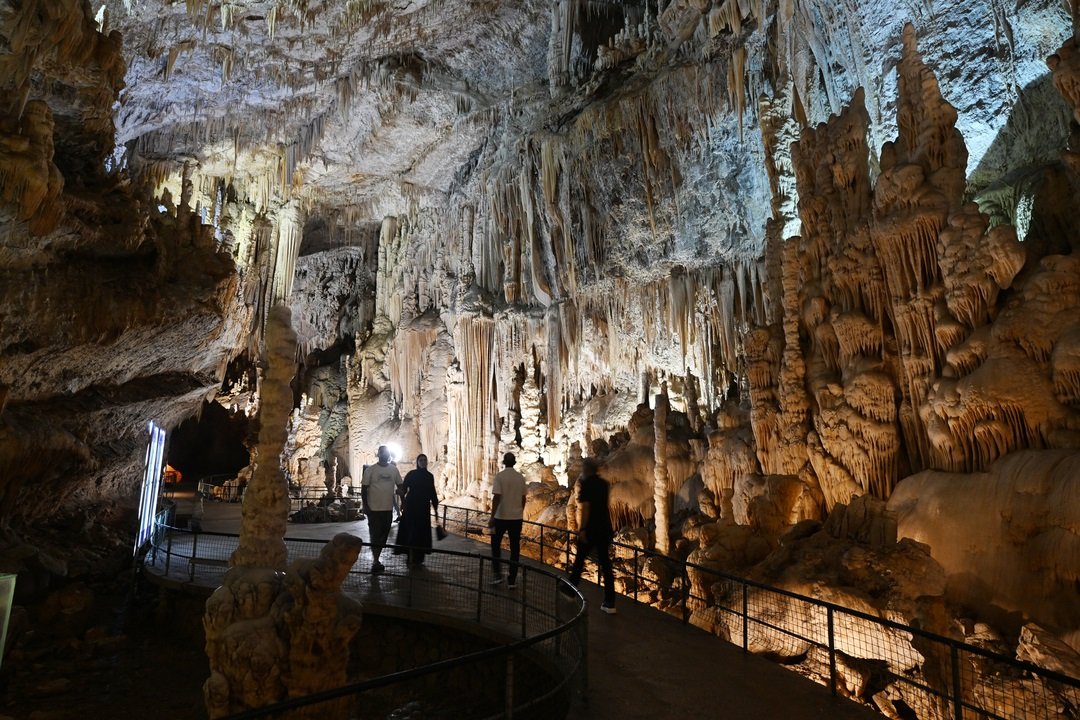
صدر عن اللجنة المكلفة تقصّي الأضرار وإعطاء التوصيات في مرفق مغارة جعيتا السياحي، التقرير النهائي عن الاضرار، وهو جاء على الشكل الآتي:
تُعدّ مغارة جعيتا من أبرز المعالم الطبيعية والتراثية في لبنان، وهي موقع سياحي وبيئي محمي ونبع مائي حيوي يغذي
بيروت وجبل لبنان، وتحتوي على تكوينات كلسية دقيقة تشكّلت عبر ملايين السنين.
2025 ، تم تنظيم حفلة خاصة داخل المغارة ) 450 مترا من المدخل في الغارة العليا و 250 مترا من /10/ بتاريخ 31
المدخل في المغارة السفلى(،
2025 بتشكيل لجنة من الخبراء للكشف على الاضرار /11/ وبناء على قرار معالي وزيرة السياحة رقم 155 تاريخ ٧
وإعطاء التوصيات وهم:
- المهندس جيلبرت ز يّو، رئيس دائرة مغارة جعيتا )رئي س ا(
- الدكتورة جوانا دمّر، رئيسة قسم علوم الأرض في الجامعة الأميركية في بيروت
- الدكتور آلان أبي رزق، خبير في الزراعة والتّنوع البيولوجي في جامعة الروح القدس الكسليك
- الدكتورة مارلين براكس، مديرة المركز الوطني للجيوفيزياء وممثلة وزارة البيئة
- المهندس جوني طوق، رئيس النادي اللبناني للتنقيب في المغاور
- المهندس بيار جعارة، خبير عزل صوت وارتجاج
2025 على كافة الأقسام التي أقيم فيها الإحتفال، وبناء عليه نفيدكم /11/ قامت اللجنة المذكورة بالكشف الميداني بتاريخ ٧
بالتالي:
الهدف العام من الكشف
تقييم ما إذا كانت الموسيقى او التجمعات قد تسببا في: - أضرار ميكانيكية )شقوق، كسور، سقوط أجزاء صغيرة(
- تغيرات في المناخ الداخلي للمغارة )ارتفاع ثاني أوكسيد الكربون، الرطوبة، درجة الحرارة(
- اهتزازات هيكلية يمكن أن تؤثر على استقرار التكوينات الكلسية
- تغيرات بيولوجية او كيميائية ناتجة عن النشاط البشري
الكشف الميداني
يهم لفت النظر أن الكشف الميداني كان بصريا ولم يتضمن أي قياسات من أي نوع كانت.
من أجل القيام بتقييم معمق، كان لا بد من التزود بأي بيانات سابقة يمكن الاعتماد عليها من أجل أي مقارنة ممكنة.
لكنه تبين أنه لا يوجد أي صور للتكوينات الأساسية وذات الأولوية أو نماذج ثلاثية الأبعاد أو قياسات سابقة مما يحد
من امكانية التقييم الدقيق للتاثيرات المحتملة التراكمية في التكوينات الكلسية.
2
تم الكشف النظري والحثي في الموقعين المختلفين حيث جرى الاحتفال، في المغارة السفلى والمغارة العليا:
صورة رقم 1: موقع الحفل في المغارة العليا صورة رقم 2: موقع الحفل في المغارة السفلى - الممرات الخرسانية في المغارة العليا:
تتضمّن بعض مقاطع الممرّات الخرسانية داخل مغارة جعيتا إنشاءات معلّقة ومثبتة جزئيا على دعامات جدارية
مدمجة في جدران المغارة. (Corbels)
Corbels لذلك، وبعد الكشف النظري على كل الدعامات وعلى الأرضية وخاصة الطبقات السفلى منها ، والكشف على
حيث لم يتبين وجود أي تصدعات مرئية أو تشققات قد تسبب خطورة على الزوار واننا نوصي بإجراء فحص هندسي
دوري للدعامات الجدارية وباخذ عينات من الباطون لتحديد قوته.
صورة رقم 3: الممرات المعلقة في اللون الاحمر
3
: (Crack Monitoring Test( – الكشف على الشقوق لمراقبة مدى اتساعها
نتيجة تحركات الأرض الطبيعية والعوامل الجيولوجية المتواصلة مع الزمن يتشكل بعض التشققات في الممرات
والصخور. لذلك، وضع النادي اللبناني للتنقيب في المغاور سنة 1962 عدة علامات لمراقبة هذه الصخور والتشققات
) وبعد الكشف عليها تبين أنه لا يوجد أي إتساع أو تحرك. )الصورة رقم 5
Corbels صورة رقم 4: الممرات المعلقة و
Crack Monitoring Test: صورة رقم 5
4 - التشكلات الكلسية في المغارة العليا والمغارة السفلى:
تتميّز مغارة جعيتا بوجود تكوينات كلسية طبيعية من بينها الصواعد والهوابط، وهي عناصر جيولوجية تشكّ لت عبر مدة
زمنية تمتد لالاف السنين نتيجة ترسّب كربونات الكالسيوم من المياه المتساقطة داخل المغارة.
لم نلاحظ أي تكسير مرئي في هذه التشكلات وخاصة في المغارة السفلى حيث كان المغنين قريبين جدا منها. - حالة نظام البيئي العام
على بعض الأسطح )Actinobacteria( تمّ رصد مستعمرات بيضاء خيطية الشكل تُشير إلى وجود بكتيريا شعاعية
الكلسية داخل المغارة. تُعتبر هذه الكائنات جزءا طبيعيا من النظام البيئي الجوفي، إذ تساهم في تفكّك المواد العضوية
الدقيقة وتفاعلات المعدنة الحيوية التي تحافظ على توازن النظام الميكروبي. - الإقفال المؤقّت لمغارة جعيتا بعد الحفل:
إنّ الإقفال المؤقّت لمغارة جعيتا يُعدّ خطوة وقائية تهدف إلى الحفاظ على القيمة الطبيعية والجيولوجية الفريدة للمغارة .
ويتيح هذا الإجراء تحقيق مجموعة من الفوائد البيئية منها إتاحة الفرصة لإعادة توازن النظام المناخي الداخلي
حيث تستعيد المغارة نسبة الرطوبة الطبيعية، والمعدل الطبيعي لثاني أوكسيد الكربون، واستقرار درجات الحرارة،
(Lampenflora) مما يحافظ على النمو الطبيعي للتكوينات الكلسية. ايضا يؤثر على تخفيف نمو الطحالب - ثاني أكسيد الكربون، الرطوبة والحرارة:
ان ثاني أكسيد الكربون والحرارة والرطوبة عناصر مترابطة تشكّل نظام توازن حيوي داخل المغارة.
وأي تغيير في أحدها يؤثر مباشرة على: استقرار التكوينات الكلسية، نمو الصواعد والهوابط، وسلامة البنية الداخلية
للمغارة. لذلك يجب تركيب محطّات مراقبة داخل المغارة. - قوة الصوت للحفلات المستقبلية:
يمكن الرجوع إلى التقرير المفصل المعد من قبل المهندس بيار جعارة.
الخلاصة: - لم يتبين وجود أي تصدعات مرئية أو تشققات في الممرات الخرسانية في المغارة العليا قد تسبب خطورة على
الزوار واننا نوصي بإجراء فحص هندسي دوري للدعامات الجدارية وباخذ عينات من الباطون لتحديد قوته.
Crack Monitoring Test – لا يوجد أي إتساع أو تحرك في - لم نلاحظ أي تكسير في الصواعد والهوابط وخاصة في المغارة السفلى حيث كان المغنين قريبين جدا منها.
.(Annex) – ان قوة الصوت للحفلات المستقبلية، يمكن الرجوع إلى التقرير التقني المفصل المرفق ربطا
Acoustic Specification
1
ACOUSYSTEM LIBAN 1
1
Jeita Grotto
Jeita – Lebanon
ACOUSTIC SPECIFICATION
Purpose: Framework for musical and artistic events in the natural cave environment of Jeita
Reference: Comparative study inspired by international best practices for acoustic management in natural
underground sites
Prepared by: Pierre GEARA and Shannon GEARA
Date: 11/11/2025
Acoustic Specification
1
ACOUSYSTEM LIBAN 2
2
Table of Contents
- CONTEXT AND OBJECTIVES ……………………………………………………………………. 3
- INTERNATIONAL REFERENCE EXAMPLES …………………………………………………… 4
2.1 LOMBRIVES CAVE – ARIÈGE, FRANCE…………………………………………………………………………….. 4
2.2 CUEVAS DEL DRACH – MALLORCA, SPAIN ……………………………………………………………………….. 4
2.3 GROTTA DI CASTELLANA – PUGLIA, ITALY………………………………………………………………………… 5
2.4 POSTOJNA CAVE – POSTOJNA, SLOVENIA ………………………………………………………………………… 5
2.5 CAVE WITHOUT A NAME – TEXAS, USA …………………………………………………………………………. 6
2.6 WAITOMO GLOWWORM CAVES – NEW ZEALAND ………………………………………………………………. 6
2.7 SUMMARY OF GLOBAL PRACTICES ……………………………………………………………………………….. 7 - ACOUSTIC AND OPERATIONAL LIMITS AT JEITA GROTTO ………………………………. 8
3.1 AUTHORIZED EVENT CATEGORIES ………………………………………………………………………………… 8
3.2 QUANTITATIVE CONSTRAINTS ……………………………………………………………………………………. 9
3.2.1 Sound-Level Limits 9
3.2.2 Spatial and Audience Parameters 9
3.2.3 Event Frequency Limitation 10
3.3 AMPLIFICATION AND EQUIPMENT CONTROLS ………………………………………………………………….. 10
3.4 CONTINUOUS ACOUSTIC MONITORING SYSTEM ……………………………………………………………….. 10 - IMPLEMENTATION AND COMPLIANCE ……………………………………………………. 11
- SUMMARY AND GUIDING PRINCIPLES ……………………………………………………. 12
Acoustic Specification
1
ACOUSYSTEM LIBAN 3
3 - Context and Objectives
The Jeita Grotto is a natural heritage site of exceptional geological and acoustic value.
Hosting musical events in such an environment requires a scientific, environmentally responsible
approach that preserves the site’s integrity and its unique sound qualities.
This specification defines the acoustic and operational conditions for organizing artistic
performances that respect the natural balance and avoid any structural or ecological
degradation.
Acoustic Specification
1
ACOUSYSTEM LIBAN 4
4 - International Reference Examples
2.1 Lombrives Cave – Ariège, France
- Event type: Acoustic concerts and candlelight performances.
- Frequency: < 5 per year.
- Audience: 80–100 people.
- Amplification: None; natural acoustics only.
- Duration: ≤ 1 h 15.
- Monitoring: Permanent SPL monitoring.
The French model prioritizes acoustic purity and preservation through very low event frequency,
small audiences, and mandatory real-time monitoring — a reference of restraint and technical
discipline.
2.2 Cuevas del Drach – Mallorca, Spain - Event type: Daily classical concert over the underground lake “Martel.”
- Format: 4 acoustic musicians (violin, cello, harpsichord, viola).
- Duration: ~10 minutes, once per guided visit.
- Amplification: None.
- Audience: ~300 visitors seated in silence.
- Restrictions: No talking, photography, or movement during performance.
The Spanish model demonstrates that even with higher audience capacity, strict control of
duration, silence, and sound level ensures sustainable daily acoustic experiences.
Acoustic Specification
1
ACOUSYSTEM LIBAN 5
5
2.3 Grotta di Castellana – Puglia, Italy - Event type: “Hell in the Cave” – theatrical and musical performance.
- Frequency: Weekly during tourist season.
- Audience: ≤ 200 per show.
- Amplification: Controlled directional sound (≤ 85 dB(A)).
The Italian model balances cultural continuity and acoustic control — showing that semi-regular
performances remain sustainable through precise dB limitation and disciplined acoustic design.
2.4 Postojna Cave – Postojna, Slovenia - Event type: Seasonal Christmas and New Year concerts within the “Concert Hall.”
- Frequency: Limited to several nights per year (typically December only).
- Audience: Around 150 seated guests.
- Amplification: Light reinforcement with limiters at ≤ 80 dB(A).
The Slovenian model demonstrates seasonal cultural programming under strict acoustic
moderation — combining limited event frequency, directional sound control, and precise soundlevel
management to preserve the natural reverberation.
Acoustic Specification
1
ACOUSYSTEM LIBAN 6
6
2.5 Cave Without a Name – Texas, USA - Event type: “Concerts in the Cave” series (~12 per year).
- Audience: ≤ 200.
- Amplification: Limited to 85 dB(A), no subwoofers.
- Monitoring: Continuous SPL meter with visual alarm when approaching threshold.
The American model represents a technically driven approach, where permanent SPL monitoring
and real-time alarms ensure compliance and performer self-regulation during each concert.
2.6 Waitomo Glowworm Caves – New Zealand - Event type: Occasional choral and orchestral concerts under the glowworm dome.
- Frequency: 1–2 per year.
- Audience: ~100.
- Amplification: None.
The New Zealand model showcases the integration of acoustic measurement and natural
reverberation, proving that even delicate environments can host rare, acoustically pure
performances under active sound supervision.
Acoustic Specification
1
ACOUSYSTEM LIBAN 7
7
2.7 Summary of Global Practices
Parameter Common Range
Event Frequency 1 – 300 events per year
Audience Capacity 75 – 300 people per event
Average sound Level (LAeq) 75 – 85 dB(A)
Peak Level (LCpeak) 90 – 100 dB(C)
Duration 10 – 90 minutes
Amplification None
Monitoring Continuous SPL systems
Acoustic Specification
1
ACOUSYSTEM LIBAN 8
8
- Acoustic and Operational Limits at Jeita Grotto
3.1 Authorized Event Categories
The organization of any artistic or musical activity within Jeita Grotto must align with the
acoustic, environmental, and structural sensitivity of the site.
Drawing on the global benchmarks observed in comparable venues the following categories
define permitted and restricted event formats.
Permitted Event Type Description and Conditions
Acoustic Concerts
Live performances using unamplified instruments (e.g., violin,
cello, harp, flute, pan flute, guitar) and/or natural voice
Small-Scale Ensembles Intimate formats (solo, duo, trio)
Choral And Vocal
Performances
A cappella or lightly accompanied voices
Traditional / Meditative
Music
Performances using regional acoustic instruments or ambient
textures (e.g., oud, flute, handpan, harp) with low percussion
Spoken-Word or Lecture
Sessions
Readings, poetry, or educational talks
Audio-Visual Recordings
(Closed Sessions)
Professional recording or filming sessions without public
attendance (duration and sound pressure must comply with
limits below)
Not permitted: amplified rock, pop, techno, rap, deep bass, heavy percussion, or sound systems
exceeding 500 W total power.
Acoustic Specification
1
ACOUSYSTEM LIBAN 9
9
3.2 Quantitative Constraints
The acoustic thresholds defined below ensure preservation of the cave’s natural balance while
allowing safe, high-quality sound reproduction. All parameters are grounded in international
field data from best practices and in relevant environmental-acoustics standards (e.g., ISO 1996-
2, UNE-EN 61672, UNESCO karst-heritage guidelines).
3.2.1 Sound-Level Limits
Parameter Definition Jeita Limit
Average Sound Pressure
Level (LAeq)
Equivalent continuous A-weighted
sound level over the full event
< 85 dB(A) Peak Level (LCpeak) Highest instantaneous C-weighted pressure < 90 dB(C) Low-Frequency Content 20 – 125 Hz band energy < 65 dB(A) Maximum duration of Exposure Cumulative time including rehearsals ≤ 2 h (including setup and rehearsal) 3.2.2 Spatial and Audience Parameters Parameter Jeita Limit Purpose / Rationale Source-to-Wall Distance > 5 m
Avoids reflection focusing / microvibration
on formations
Stage-to-Ceiling
Clearance
3 m
Prevents direct energy coupling with
stalactites
Audience Capacity < 120 persons Matches structural load
Acoustic Specification
1
ACOUSYSTEM LIBAN 10
10
3.2.3 Event Frequency Limitation
Based on comparative analysis of global cave venues and environmental-acoustic standards, the
acceptable operational threshold for Jeita-type karst chambers is defined as a maximum of one
(1) event per week. This interval allows the cave’s acoustic, geological, and micro-vibratory
equilibrium to return to baseline conditions between sessions, in line with ISO-defined
measurement cycles and UNESCO’s “periodic recovery” principle.
3.3 Amplification and Equipment Controls
- Subwoofers and low-frequency reinforcement are prohibited.
- Microphones are prohibited.
- Only low-power directional systems that must include a calibrated SPL limiter set to 85
dB(A) LAeq are permitted (total ≤ 500 W).
3.4 Continuous Acoustic Monitoring system
To ensure compliance, Jeita Grotto must operate a real-time sound-level monitoring network
linked to the cave management system:- Minimum of one Class 1 sound level meter (SLM) positioned at audience centroid.
- Real-time display visible to performers and technicians.
- Alarm system: visual or audible alert triggered at 83 dB(A) LAeq or 87 dB(C) LCpeak.
- Data storage: recordings archived ≥ 24 months.
Acoustic Specification
1
ACOUSYSTEM LIBAN 11
11
- Implementation and Compliance
- Every event must be approved in advance by a qualified acoustic engineer.
- Pre-event calibration of all sound-monitoring equipment (Class 1 sound level meter or
equivalent) shall be conducted and documented.- Continuous sound-level monitoring must operate throughout rehearsals and performances:
o The system shall record LAeq and LCpeak values in real time.
o An audible or visual alert must activate when thresholds of 85 dB(A) LAeq or 90 dB(C)
LCpeak are approached or exceeded.- A trained acoustician or technician must supervise the monitoring system during all
performances and take immediate corrective action or temporarily suspend the event if limits
are exceeded.- All readings shall be archived for a minimum of 24 months.
- Within 15 days after each event, a post-event acoustic compliance report shall be issued,
summarizing measurements and confirming adherence to limits.- Annual verification and calibration of all measurement devices must be performed by a
certified acoustic laboratory.- All technical and production personnel must receive training in acoustic management and
sensitivity of karst environments.
Acoustic Specification
1
ACOUSYSTEM LIBAN 12
12
- Summary and Guiding Principles
This specification establishes a comprehensive framework ensuring that musical events in the Jeita
Grotto:
- Respect the site’s natural acoustic balance
- Preserve its geological and biological formations
- Maintain minimal vibrational and acoustic footprint
- Align with internationally recognized best practices from France, Spain, Italy, Slovenia, the
United States, and New Zealand
When applied correctly, this framework will allow Jeita Grotto to become a global reference for
harmony between music, science, and nature, ensuring its acoustic and ecological sustainability
for generations to come.